
What to Expect Hiking to Rainbow Mountain
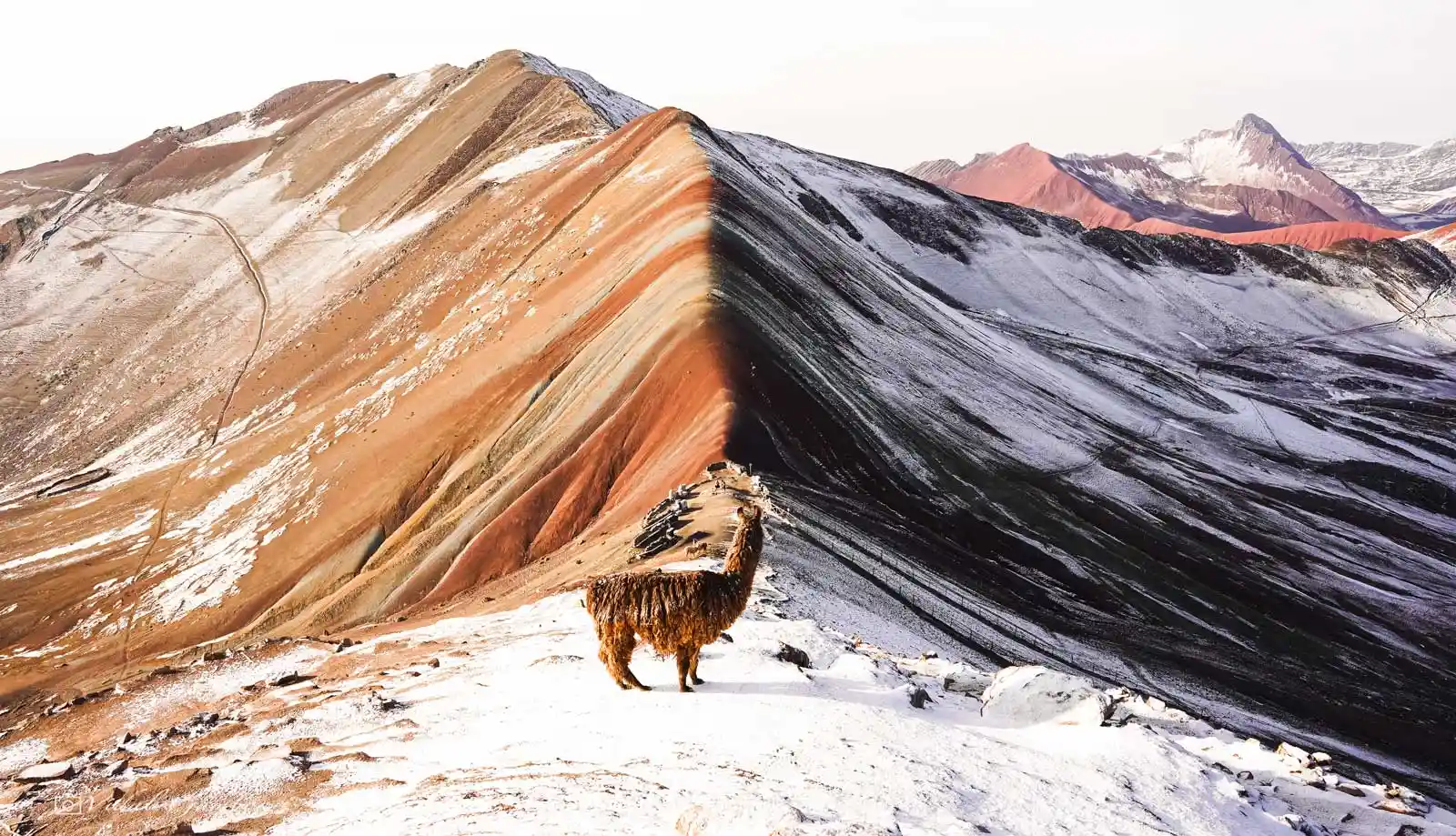
Rainbow Mountain stand about the clouds, with the Andes stretching endlessly in every direction. It is almost impossible to believe
this mountain is real.
Since it was discovered, the Rainbow Mountain become one of the most visited tourist attractions in Peru. This is not just a hike, it combines high-altitude physical challenge,
breathtaking views, early wake up, and long drive, making it one of the most iconic adventure in the Peruvian Andes. If you are planning to visit this
What is Rainbow Mountain?
Rainbow Mountain is located in the southern side of Cusco at three hours of drive from the city, near to Ausangate mountain. It is one of the highest tourist destination in Peru and become very famous since some influencer posted the pictures on social media. Today more than two thousand people visit it every day.
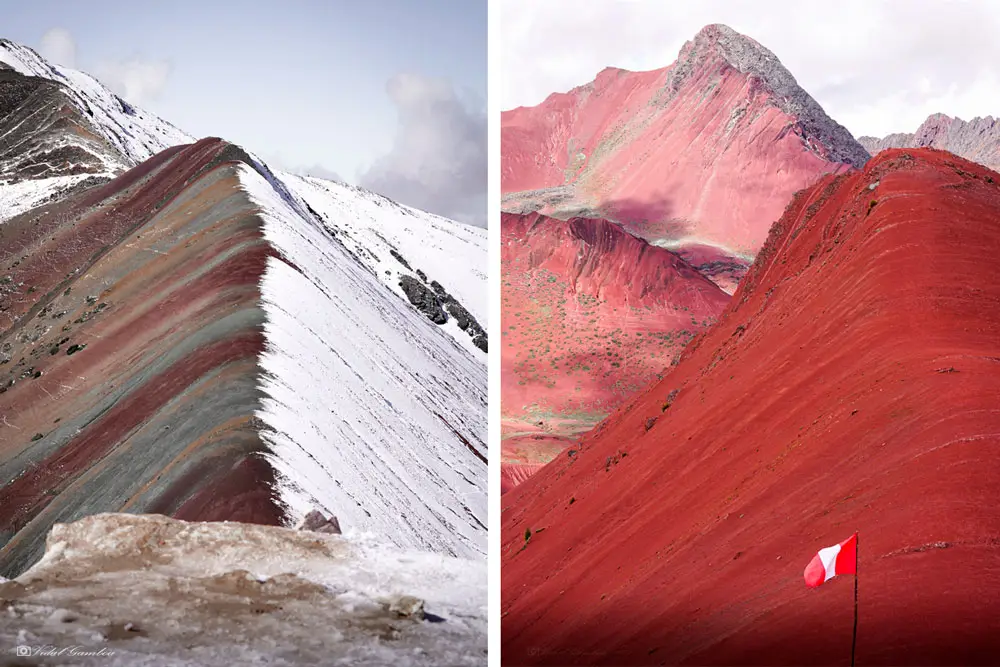
The natural colors comes from different mineral composition layered over millons of years, iron oxide creates deep red, sulfur adds yellow tones, copper contributes green and blue shades, and quartz stone creates white color. The mountain was covered by snow and ice for many years, climate changes have revealed these vibrant layers, turning Vinicunca into a global travel sensation.
Unlike other scenic spots in the Andes, Rainbow Mountain’s appeal is purely geological and visual. The vibrant coloration is highly dependent on weather and sunlight, so visits can vary dramatically depending on conditions.
Rainbow Mountain Location and Access
Rainbow Mountain lies within the Andean region of Peru, close to the village of Cusipata. The closest major city is Cusco, which serves as the main hub for transportation and tours. Travelers typically reach Rainbow Mountain through guided day trips, which include transportation to the trailhead and entrance fees. The drive from Cusco takes approximately 3–4 hours and passes through high-altitude villages, grasslands, and the rolling Andean terrain.
Our day started early when the guide picked us up from our hotel. We drove for rougly two hours to reach a restaurant for breakfast. Then continued for another hour to arrive at the begining of the hike. As the first light touched the peaks, and the crisp morning air made each breath feel alive. We started moving toward the iconic Rainbow Mountain, and the excitement grew to see this natural marvel not just in photos, but standing there, seeing it with my own eyes.
The Hike: Distance, Duration and Difficulty
- Hike: The hike distance will depend which route you will take. Today there are serveal routes to reach the Rainbow Mountain, bur rougly is 5 to 7 kilometers round trip.
- Duration: Depends on your pace, it can take minimum 2 to 3 hours round trip hike. If you decide to hike to Red Valley, consider adding 1 hour more.
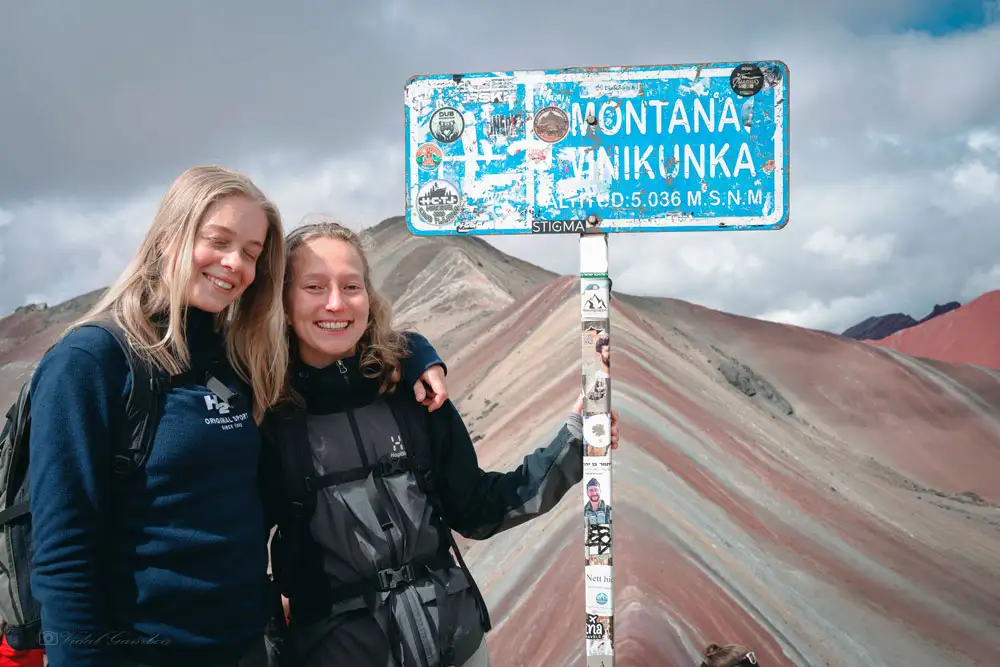
- Altitude: The viewpoint of the Rainbow Mountain sits at 5,036 meters (16,522 feet) above sea level. The Red Valley sits lower at 4,980 meters. Usually the hike start at 4,680 m or at 4,740 meters, depending of the route your choice
- Challenging: Hiking to the Rainbow Mountain is considered as challenging due the high elevation.
For 80% of the travelers, the primary challenge is the elevation rather than technical difficulty. Oxygen levels are significantly lower at over 4,800 meters, and travelers can experience fatigue, dizziness, or shortness of breath. Proper acclimatization in Cusco or the surrounding valley for at least 2–3 days before attempting the hike is strongly recommended.
The views are impressive, standing inf front of it, the colors took my breath away, seeing the reds, yellows, greens, white, and purples layers stretched across the peak like someone has painted on purpose, but it is natural creation.
Common Challenges Travelers Face
Even well-prepared travelers often encounter issues that generic guides do not highlight:
- Altitude Effects:Rapid ascent can lead to headaches, nausea, or extreme fatigue. The final ascent, in particular, requires frequent breaks.
- Weather Dependence:Rain, clouds, or haze can obscure the colorful layers. Dry season months (May to September) provide the best visibility
- Crowds:Rainbow Mountain has become very popular, and the trail can be congested between 9 a.m. and 11 a.m. Arriving early can help avoid crowds.
- Limited Facilities:There are no permanent restaurants or restrooms along the trail, so travelers need to bring their own water and snacks.
- Access:Today, you will find different option to arrive the Rainbow Mountain, hiking, horse riding, ATVs ride, and motorcicle ride, but you need to pay extra for those, except for hike.
The Red Valley
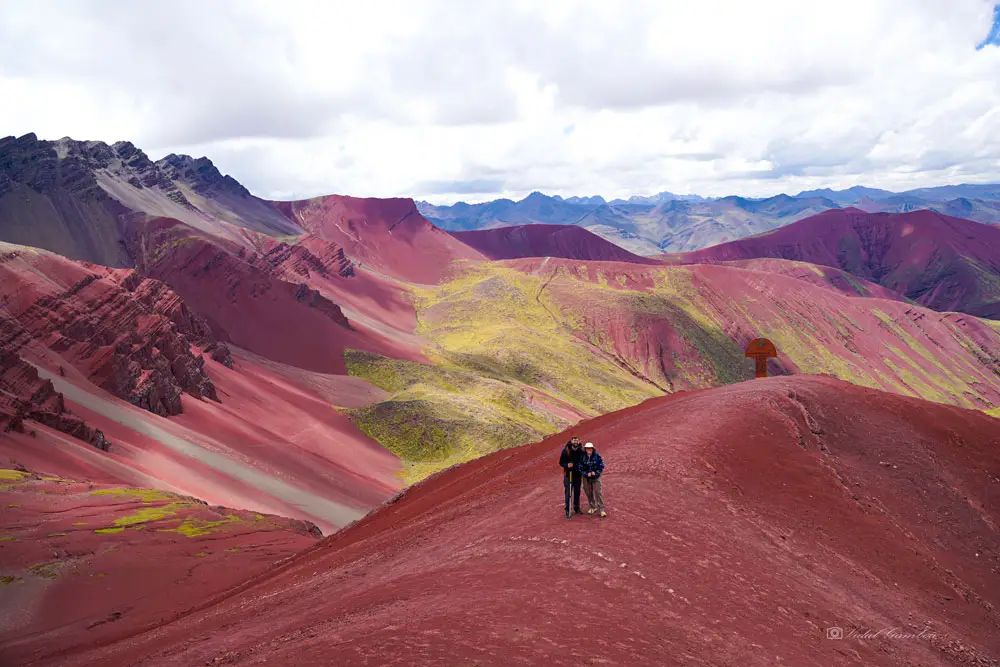
The Red Valley is one of the must-do things when you explore the Rainbow Mountain, it is a hidden gem just beyond Vinicunca, with sweeping expanses of deep red and rust colored hills that stretch as fas as your eyes can see.
Unlike the crowded main viewpoint, here the selece and vastness make you feel completely connected to the landscape. Walking here, the earthy hues contrast beautifully with the sky, creating a scene that feels both otherworldly and peaceful.
Apu Ausangate Mountain
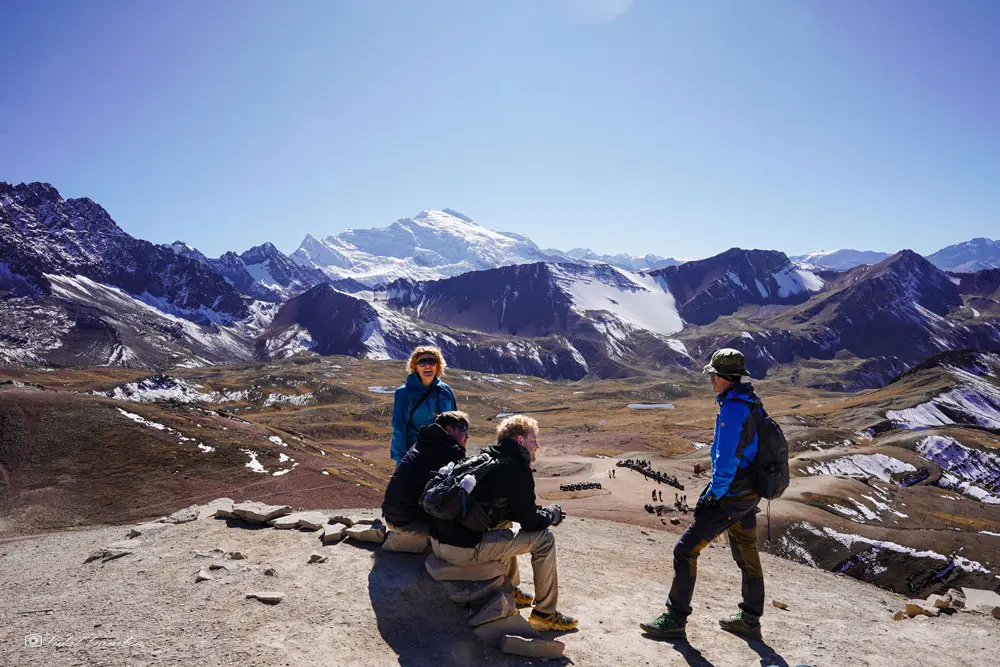
Upon arrive to the viewpoint of the Rainbow Mountain, you will be able to see Ausangate Mountain, the highest peak in the region that stand at 6,384 meters (20,940 ft). You will feel the powerful energy when you look at it. It is revered as a sacred mountain by Quechua people, it is considered as protector and life creator for the Andean communities.
Experiencing Apu Ausangate is a journey of awe and reflection—standing before its immense slopes inspires humility, reverence, and a deep connection to the Andes and its ancient traditions.
Llamas & Alpacas
Alpacas and Llamas are from this zone, this is the hibit for those camilid, roaming freely across the high-altitude landscapes. These gentle camelid have been domesticates by Andean communities for centuries. providing wool and transport. Along the hike you encounter more alpacas grazing on the slopes, often framed against the vibrant red, green, and yellow of the mountainside.
Their calm presence adds a sense of life and culture to the landscape, making the experience more authentic. Photographers and travelers alike delight in capturing their natural beauty and interactions, which highlight both the ecological and cultural richness of the Andes.
Best Time to Go
The dry season, from May to September, is the optimal time to hike Rainbow Mountain. During these months, skies are clearer and colors appear more vivid. The wet season (October to April) brings fewer crowds, but rainfall can make the trail slippery and reduce visibility of the colorful layers.
Early morning hikes are recommended to minimize exposure to both crowds and afternoon cloud cover, which often diminishes the view of the mountain’s distinctive stripes.
What to bring:
Proper gear is essential due to temperature fluctuations and high-altitude conditions. Recommended items include:
- Warm layers (thermal base, fleece, windbreaker)
- Waterproof jacket or poncho
- Hiking boots with good traction
- Hat, gloves, and sunglasses
- Sunscreen (UV exposure is strong at altitude)
- Water and high-energy snacks
- Extra cash for entrance fees, water bottle, toilet or snack.
Health Considerations
What to know before you go
- Travelers should acclimatize for at least 2–3 days before the hike.
- Coca leaves or altitude medication can alleviate symptoms of high-altitude sickness.
- Walking at a steady, moderate pace is crucial to conserve energy.
- Rest well a night before heading there, avoid alcohol or any kind of drugs.
- Joining a small group or a private tour is recommended if you are inexperienced hiker.
Regular exercise before the trip, such as cardio, hiking, or walking at an incline, can make a big difference in endurance. Even those in good shape can feel the effects of high altitude, so proper preparation and acclimatization are key to enjoying the experience safely and comfortably.
Local Support and Horse Rentals
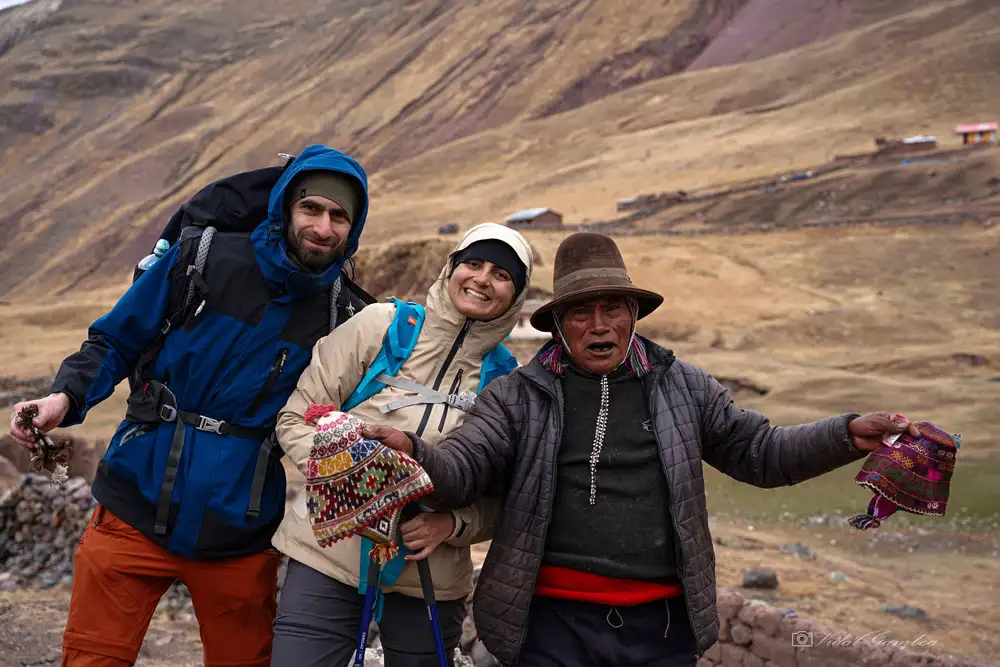
Local Quechua communities operate small businesses along the trail. Horse rentals are available for those who require assistance with the altitude or find the hike physically challenging. Utilizing these services contributes to the local economy and supports sustainable tourism in the region.
Observational Tips for Travelers
- Colors Depend on Weather: Sunlight intensity directly affects how vibrant the stripes appear. Cloudy or rainy days may make the mountain appear muted.
- Crowd Timing: Most tourists arrive mid-morning; early departures from Cusco often result in quieter trails.
- Photography Considerations: A wide-angle lens captures the vastness of the Andes, but the colors are best photographed in bright morning light.
- Physical Limitations: The trail can be skipped in sections using horses, but the steepest ascent still requires walking and proper conditioning.
What Travelers Often Misunderstand
- Altitude Underestimation: Even experienced hikers often struggle with thin air at the summit.
- Time Allocation: Round trips can take 3–4 hours, and delays are common if groups are large.
- Weather Misjudgment: Clear skies are not guaranteed; carrying rain gear is necessary.
- Physical Readiness: The trail is moderate in technical difficulty but strenuous due to high elevation.
Conclusion: Is Rainbow Mountain Worth Visiting?
Rainbow Mountain is a visually stunning destination with unique geological features. While the hike is challenging, proper preparation, acclimatization, and realistic expectations make the experience rewarding.
Travelers seeking an accessible but dramatic high-altitude adventure in the Andes will find Rainbow Mountain unmatched in color, scale, and scenic variety. By understanding the challenges and respecting local environments, visitors can enjoy this remarkable destination responsibly and safely.


